
Free, in any browser with a microphone
Banjo Tuner
This banjo tuner hears each string through your microphone, names it, and shows how many cents sharp or flat it sits and which way to turn the peg. Five-string open G (g D G B D) is set from the start, short fifth string included; switch to double C, drop C, G modal, open D, or a four-string tenor, Irish tenor or plectrum banjo. A string that holds in the green band gets a tick. It is free, needs no sign-in, and nothing you play is recorded or sent.
The G string, 9 cents flat
String 3 in open G: G3 is 196.00 Hz, and the open strings ring a G chord. A banjo string we synthesized, picked and left to ring.
Banjo · Open G
Tune up · 9¢ flat · String 3
Steady after 0.31 s
- no sign-in, nothing recorded
- Free
- for five- and four-string banjos
- 8 tunings
- median error, 851 test strings
- 0.06¢
- open G, short string listed first
- g D G B D
- pick to steady reading, median
- 0.31 s
- 440 to start, 442 and 432 a tap away
- A4 415 to 466
How do I tune a banjo with an online banjo tuner?
Open the banjo tuner, press Start tuning and allow the microphone. Five-string open G is ready: g D G B D, the short fifth string listed first, as it is strung. Pick string 4, the low D, and let it ring: the banjo tuner names the string and shows how many cents it is off. Bring a flat string up; take a sharp one below the note and come back up. When the needle sits in the green band, do G, B and the high D, then the short g, and go round once more.
Tune a banjo in three steps with the banjo tuner
Any recent browser on a phone, tablet or computer runs the banjo tuner. Rest the device close to the banjo, somewhere quiet.
Press Start tuning
Let the browser use the microphone. Open G comes up first; choose double C, drop C, G modal, open D or a four-string tuning if that is how your banjo is set up.
Pick one open string
Keep the others quiet. The banjo tuner finds which string you picked; tap a string on screen to hold it as the target, and tap it once more for auto.
Turn into the green band
Approach the note from below. Hold the needle in the band and the string earns its tick; the count climbs to Tuned 5/5 on a five-string, 4/4 on a four-string.
An online banjo tuner for five- and four-string banjos
Eight banjo tunings in one online banjo tuner, tested on 851 synthetic banjo strings and compared with nine other online tuners.

Eight banjo tunings, short fifth string included
Open G, double C, drop C, G modal and open D cover the five-string banjo; tenor, Irish tenor and plectrum cover the four-strings. Each tuning lists its notes string by string, the five-string’s short drone string first, as it is strung, so you see where every string should land before you pick it.
Beside nine other online tuners
We played six test tones into nine other online tuners and into ours. They are guitar, bass and ukulele notes rather than banjo strings, but one is a ukulele’s G4, the very pitch of a banjo’s short fifth string. Ours read that G at 0.00 cents, and all six within half a cent. On the same G, one of the others named the wrong note and one showed nothing.
Measured on 851 banjo strings
We gave the banjo tuner every string of all eight tunings, in tune and up to 25 cents off, with background noise, a weak or missing fundamental and the low cut of a phone microphone: 851 synthetic strings. The median error was 0.06 cents, 95% of readings came within 0.63 cents, and no string was mistaken for another. The 16 left without a steady reading all had noise just 10 dB under the string, which buried the note as it faded.
A steady reading before the note fades
A banjo note is loudest at the pick and fades fast, so the reading has to come early. The banjo tuner skips the bright attack, which runs a few cents sharp, and gives a steady reading from 0.31 seconds (0.36 s for 95% of strings), typically about 2.8 cents above where the string comes to rest. The card is string 4, the low D: steady at 7.7 cents sharp at 0.31 seconds, easing down to 5.1.
Needle or strobe, in the band you set
The needle gives the cents in one look; its green band is ±3 cents to begin with, ±1 when you want it exact and ±5 for a fast check between tunes. The strobe’s stripes slide right when a string is sharp and left when it is flat, slow down as you close in and stand still once it is right.
Reference tones for tuning by ear
Each string in the banjo tuner has a play button that sounds its target note, so you can match the string by ear, or tune with no microphone at all. Move A4 anywhere between 415 and 466 Hz, 442 and 432 a tap away, to sit with a fiddle, a piano or a recording that is not at 440.
A banjo tuning of your own, saved as a link
Move any string up or down a semitone at a time to build a banjo tuning that isn’t in the list, such as open A (a E A C♯ E): open G raised a whole step on every string, common in old-time playing. Copy the link and the banjo tuner opens with it set; the ticks and the Tuned count behave just as they do for the eight presets.
Banjo tuner samples: picked strings and their readings
Six banjo strings we synthesized and picked: open G’s low D, G and B, the short fifth string, the low C of double C and a tenor banjo’s C, each read by the code the banjo tuner runs in the studio. Pick a card to try it, and the studio switches to that card’s tuning.
Banjo tuning guide: open G, other keys and four-string banjos
5 string banjo tuning: open G (g D G B D)
Standard five-string banjo tuning is open G. From the short string to the thinnest long one it runs G4, D3, G3, B3 and D4: 392.00 Hz, 146.83 Hz, 196.00 Hz, 246.94 Hz and 293.66 Hz. Strum the open strings and they ring a G major chord, which gives the tuning its name. Players write it gDGBD, with a small g for the short string.
The fifth string is shorter than the rest: its peg sits on the side of the neck at the fifth fret, and it is tuned to G4, an octave above string 3. The thumb plays it as a high drone between melody notes. Strings are counted from the floor up, so the high D is string 1, B string 2, G string 3, the low D string 4 and the short g string 5. The banjo tuner shows them as they are strung, short g first.
How to tune a banjo with the banjo tuner
Start with string 4, the low D, then the G, the B and the high D, and leave the short g for last. End each string by coming up to the note: when it is sharp, let it down past the note and bring it back. The peg then holds the string under tension instead of letting it creep flat.
A banjo’s bridge is not glued: string pressure holds it on the head, so changing one string moves the others a little. Once all five are ticked, go round again, and a third time after a big change of banjo tuning.
- 1Flat (needle on the left): turn the peg up.
- 2Sharp (needle on the right): drop below the note, then turn up to it.
- 3Ticked and in the band: go to the next string.
Double C, drop C, G modal and open D banjo tuning
Double C (gCGCD) lowers string 4 a whole step to C3, 130.81 Hz, and raises string 2 a half step to C4. It suits tunes in C and is a common tuning for clawhammer players.
Drop C, also called C tuning (gCGBD), lowers only string 4 to C. G modal, often called sawmill (gDGCD), raises string 2 to C, so the open strings make neither a major nor a minor chord, a sound suited to modal tunes. Open D (f♯DF♯AD) brings the short string down to F♯4, string 3 to F♯3 and string 2 to A3, and the open strings ring a D major chord.
4 string banjo tuning: tenor, Irish tenor and plectrum
A tenor banjo is tuned in fifths, C3 G3 D4 A4, the same notes as a viola’s open strings, and is mostly played with a pick in jazz and early dance bands. The Irish tenor banjo sits lower, G2 D3 A3 E4, an octave below a fiddle, which suits Irish traditional tunes.
A plectrum banjo has the long neck of a five-string but no short string, and is tuned C3 G3 B3 D4: the four long strings of drop C. Choose Tenor, Irish tenor or Plectrum in the banjo tuner and the screen shows four strings with their targets, with the count running to 4/4.
Banjo tuning chart: all eight tunings
Every tuning in the banjo tuner, strings in the order they are strung (on a five-string, the short string first, then low to high):
- 1Open G: G4 D3 G3 B3 D4 (gDGBD)
- 2Double C: G4 C3 G3 C4 D4 (gCGCD)
- 3Drop C: G4 C3 G3 B3 D4 (gCGBD)
- 4G modal or sawmill: G4 D3 G3 C4 D4 (gDGCD)
- 5Open D: F♯4 D3 F♯3 A3 D4 (f♯DF♯AD)
- 6Tenor: C3 G3 D4 A4
- 7Irish tenor: G2 D3 A3 E4
- 8Plectrum: C3 G3 B3 D4
Noisy rooms, fading notes and A4 on the banjo tuner
A banjo is loud at first and quiet soon after, so give the banjo tuner a clean, firm pick close to the microphone and let the string ring. In a noisy room, pick again nearer the device: in our tests, the only strings left without a reading had heavy noise over a note that had already faded.
The banjo tuner starts at A4 = 440 Hz. Playing with a fiddler or a recording that sits a little sharp or flat, set A4 anywhere from 415 to 466 Hz, with 442 and 432 one tap away, and every string’s target follows.
Fresh banjo strings creep flat for the first few days. Check them with the banjo tuner every time you pick up the instrument until they stop moving.
Who uses a banjo tuner, and when
From a first lesson to a jam circle, six times the banjo tuner earns its place.
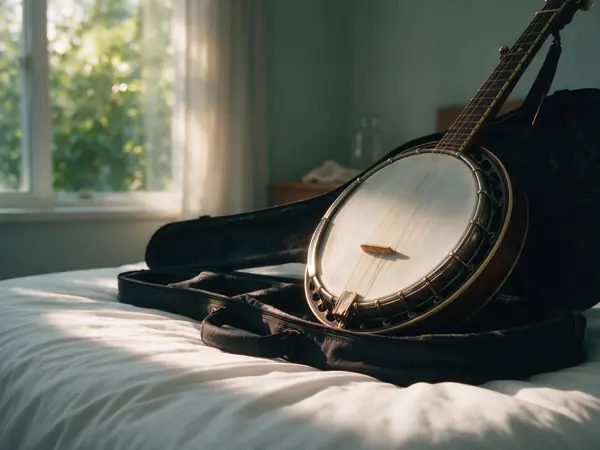
A first five-string banjo
Learn which string is the short one and which is string 1 while the banjo tuner ticks each in turn.
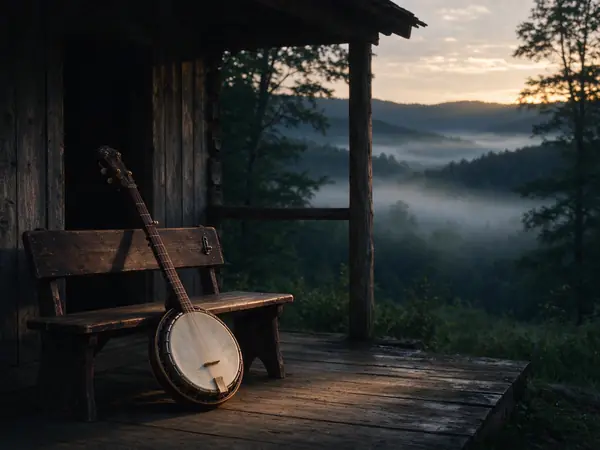
Old-time tunes in double C
Drop string 4 to C and raise string 2 to C before the next tune, then come back to open G.
Bluegrass practice in open G
gDGBD before every session, with the short g checked against string 3 an octave below.
An Irish session on a tenor
Choose Irish tenor, G D A E, to match the fiddles; move A4 if the group sits away from 440.
Jazz rhythm on tenor or plectrum
C G D A or C G B D, each string brought in on its own before the first chord.
Right after a string change
New strings stretch; run the banjo tuner again after each tune until all five hold.
Banjo tuner FAQ
More audio tools


Open the banjo tuner
Start the banjo tuner, pick the low D and work up to the short g: every string shows its note, its cents and which way to turn.