
Free, in your browser
BPM Finder
Drop a song or a video into the BPM finder and read its tempo to a tenth of a BPM, with half and double next to it. The beats it found are drawn on the waveform, a click plays on each one so you can hear the grid, and the key comes with every reading. Drop a whole folder: the BPM counter works through it and exports a CSV.
House loop, 128 BPM
Made here at exactly 128 BPM in A minor, so the reading can be checked against the truth.
128.0BPM
Other readings: 64.0 · 256.0
A minor
Camelot 8A · Open Key 1m
relative C majorcould also be A major 11B
- Quarter
- 469 ms
- Eighth
- 234 ms
- Dotted eighth
- 352 ms
- Eighth triplet
- 156 ms
- Sixteenth
- 117 ms
- One bar of 4/4
- 1875 ms
Made at 128 BPM in A minor 8A
- no sign-up, nothing to install
- Free
- tempo readings to a tenth
- 0.1 BPM
- true tempo shown, 664 dance tracks
- 97.1%
- with clicks on every beat
- Beat grid
- with its Camelot code
- Key too
- for a whole folder of songs
- CSV
How do you find the BPM of a song?
Drop the song into a BPM finder. It listens for the moments the sound changes, works out how often they repeat, and turns the gap between beats into beats per minute: half a second between beats is 120 BPM. This BPM detector then marks every beat on the waveform, so you can play the song with clicks on top and hear whether the song BPM it found sits right.
Use the BPM finder in three steps
Audio or video, one song or a hundred.
Drop your files
MP3, WAV, FLAC, M4A, or a video such as MP4 or MOV. Several at once is fine.
Read the tempo
Each file gets its BPM to a tenth, the other readings of its beat and its key, in a few seconds.
Check it and export
Play the song with clicks on the beats, switch to half or double if needed, then download the CSV.
A BPM detector you can check by ear
A number alone is hard to trust. This BPM finder shows you the beats it heard and lets you listen to them.
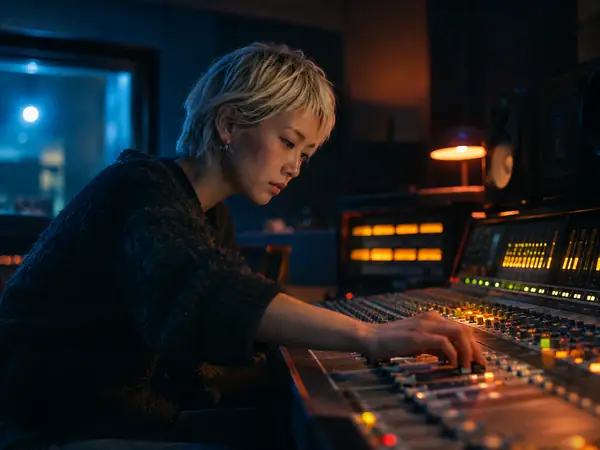
Tempo to a tenth, with the other readings
The tempo finder fits a line through every beat it found, so a song at 127.9 reads 127.9, not a rounded guess. Half and double sit beside it, and when a swing or shuffle feel makes two thirds or one and a half times the tempo fit almost as well, those readings are offered too.
A beat grid you can hear
Every beat the BPM counter found is a line on the waveform, every fourth one brighter. Turn on the clicks and they land on those beats while the song plays: if they drift, try another reading and the grid moves with it.
A folder at a time
Drop a whole crate. The BPM finder works through the songs one after another, lists each with its tempo and key, sorts the list by BPM or by Camelot code, and exports it as a CSV for a spreadsheet or your DJ notes.
Song BPM from video files
The tempo of a music video, a dance clip or a screen recording comes straight from the video file, MP4, MOV, MKV or WebM, without converting it to audio first.
The key with every reading
Each song also gets its key, its Camelot code and Open Key, so the same run gives you everything harmonic mixing needs. The key finder page goes further with the Camelot wheel and chords to check by ear.
Accuracy you can look up
Tested on public research sets: for 97.1% of 664 electronic dance tracks the true tempo is the reading or one shown beside it, and the first reading of the BPM detector matches it for 77.9%; on 698 ballroom dance excerpts the figures are 92.6% and 71.2%.
BPM finder samples
A loop made here at exactly 128 BPM, so the reading can be checked against the truth, and music made on this site. Play one and watch the beat light up, or open it in the studio.
BPM guide: tempo, beats and when to trust a reading
What BPM means
BPM, beats per minute, is the speed of the pulse you would clap along to. A song at 60 BPM has one beat every second; at 120 BPM, two. It says nothing about how busy the music sounds: a ballad can have fast hi hats over a slow pulse.
Producers set the tempo in their DAW before recording, DJs match the tempo of two songs to mix them, and dancers and runners pick music whose song BPM matches their steps.
How a BPM detector reads a song
First it listens for onsets, the moments the sound changes: a kick, a snare, a strummed chord. Then it looks for the gap at which those onsets repeat most strongly, and it prefers tempos people usually count, which is why a song is far more often read at 120 than at 60 or 240.
Finally it walks through the song beat by beat and fits a line through the beats it found. That is where the tenth of a BPM comes from, and why the grid on the waveform follows the actual drums rather than a ruler.
Half, double and the in-between readings
Most tempo disagreements are not errors but counting choices. Drum and bass at 174 BPM is often felt at 87, trap at 140 at 70, and a waltz can be counted in threes or in whole bars. The BPM finder shows the reading it trusts most and puts the other plausible ones beside it.
Swing, shuffle and bossa nova add a third kind: a feel that divides each beat in three can make one and a half times, or two thirds of, the tempo fit almost as well. When that happens the extra reading appears with the others; play the clicks with each and keep the one your foot agrees with.
Common tempos by style
A reading far outside these ranges is worth a second listen, though plenty of songs sit outside them on purpose.
- 1Ballads and slow soul: 60 to 80 BPM.
- 2Boom bap and lo-fi hip hop: 80 to 95 BPM.
- 3Pop and rock: mostly 100 to 130 BPM.
- 4House and disco: 118 to 128 BPM.
- 5Techno and trance: 125 to 145 BPM.
- 6Dubstep: 140 BPM; drum and bass: 170 to 178 BPM.
When to check the BPM by ear
Next to each reading the BPM counter says how clear the beat was. Ambient pieces without drums, live recordings that speed up and classical music with a free tempo give weak or changing pulses; the reading is then marked for a check, and a recording with no steady beat at all, such as speech or noise, says so instead of guessing.
To check, play the song with the clicks on. If they stay on the drums through the whole song, the reading is right. If they drift slowly, the song changes tempo; if they fall between the beats, try another reading, or count along with the tap BPM tool.
For a song that changes tempo, analyze the part you need: trim it with the audio trimmer first, then drop the clip in.
From BPM to your DAW
Type the tempo into your project before you import a sample and it lines up with the bars. In a DAW that stretches clips, set the clip to warp at the tempo the BPM finder gave; in others, set the project tempo and drag the audio onto the first beat, which the waveform here shows.
Delay and reverb times follow from the same number: a quarter note lasts 60,000 divided by the BPM in milliseconds. The studio lists the common note lengths next to each reading.
Who uses a BPM finder
Anyone who needs the tempo of a recording, not a guess.
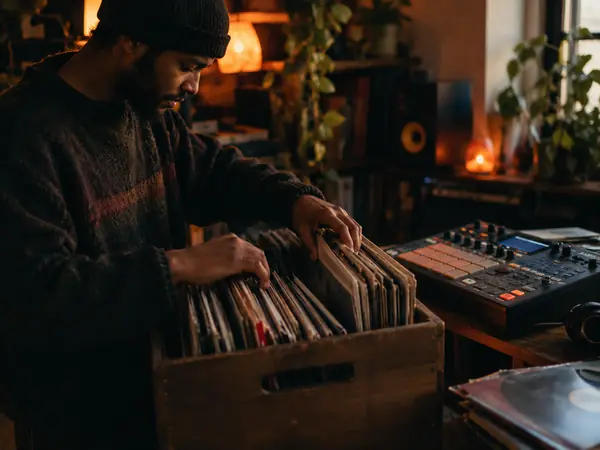
DJs
Analyze a crate, sort it by BPM and key, and plan the transitions.
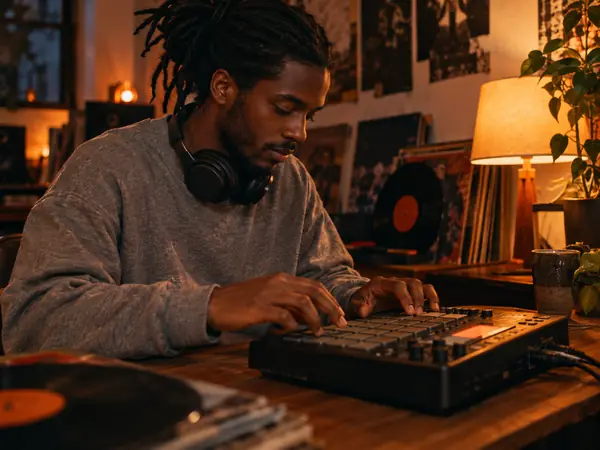
Producers
Match a sample or an acapella to the project tempo before importing it.
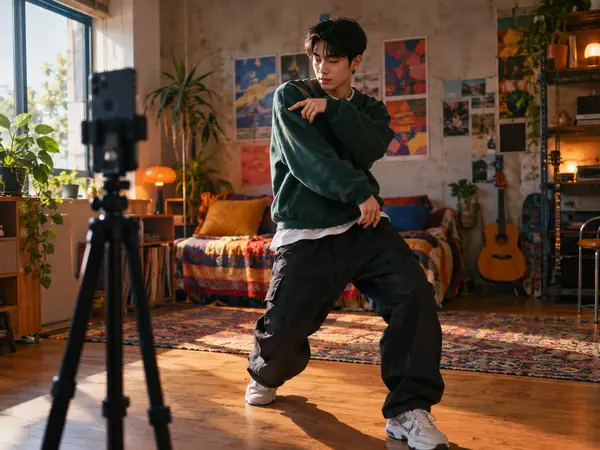
Dancers and instructors
Pick songs whose tempo suits a routine or a class.

Video editors
Cut to the beat of a music track, straight from the video file.
Bands and players
Practice a part with clicks on the song’s own beats, not a metronome that drifts from it.
Home studios
Read the tempo of a demo or a bounce before you add parts to it.
BPM finder FAQ
More audio tools

Open the BPM finder
Drop songs or videos into the BPM finder and read the tempo, the beat grid and the key, free in your browser.