
Free, in your browser
Violin Tuner
This online violin tuner listens through your microphone as you bow or pluck an open string. It works out whether you played the G, D, A or E, shows how many cents flat or sharp it is, and tells you which way to turn the fine tuner or the peg. Set A4 to 440, to 442 for an orchestra that tunes higher or to 415 for baroque pitch, or make a tuning of your own such as the fiddle’s A E A E. Each string is ticked once it holds in tune. Nothing is recorded.
The A string, 8 cents flat
String 2, the note an orchestra tunes to: A4 is 440.00 Hz. A violin string we synthesized, bowed steadily.
Violin · Standard
Tune up · 8¢ flat · String 2
Steady after 0.41 s
- no account, nothing recorded
- Free
- string 4 up to string 1
- G D A E
- 95% of readings on synthetic strings
- ±0.12¢
- both read, one string at a time
- Bow or pluck
- or needle, in tune within ±1, 3 or 5¢
- Strobe
- 440, 442, 443 or baroque 415
- A4 415 to 466
How do I tune a violin with an online violin tuner?
Open the violin tuner, press Start tuning and allow the microphone; standard G D A E is already set. Begin with the A string: draw a long, even bow or pluck it, and the violin tuner names the string and shows how many cents flat or sharp it is. Turn the fine tuner, or the peg if the string is far out, until the needle rests in the green band. Then tune the D, the G and the E the same way, and check the A once more.
Three steps with the online violin tuner
The violin tuner online works in any current browser, on a phone, a tablet or a computer. Rest it on the music stand, close enough to hear the violin.
Press Start tuning
Let the page hear the microphone. The four strings are ready; if your orchestra tunes to 442, set A4 first.
Bow or pluck one string
Play an open string on its own, with the bow or pizzicato. The violin tuner finds which string it is, or tap a string to make it the target.
Turn into the green band
Small turns of the fine tuner until the needle settles in the band. The string gets its tick and the count moves to Tuned 1/4.
A violin tuner for bowed and plucked strings
Four strings a fifth apart, read by this online violin tuner from a steady bow or a pizzicato, with figures from our own tests.
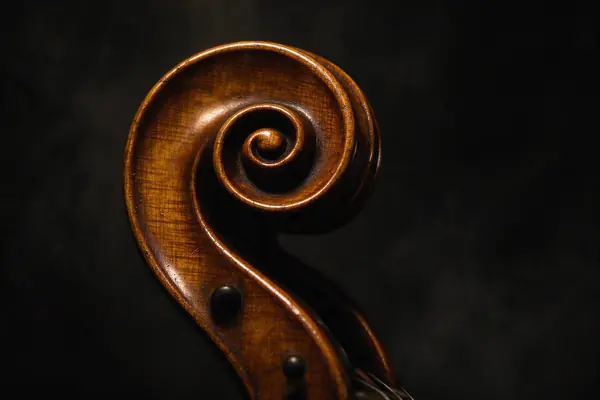
The four strings, G D A E
Standard tuning runs G3, D4, A4 and E5 from the lowest string, each a perfect fifth above the last, and the violin tuner shows the hertz it hears beside the hertz the string should reach. It works out which string you bowed from the note itself, so you can go round in any order. When a string is so far out that it would read as its neighbour, tap the one you are tuning and the violin tuner holds that string as the target.
Measured on synthetic bowed strings
We synthesized 92 perfectly steady bowed violin strings for the violin tuner to read: all four, in tune and up to 25 cents out, some with background noise, a weak or missing fundamental, or a phone microphone’s low cut. The median error rounds to 0.00 cents, 95% of readings came within 0.12 cents, and no string was taken for another. On these synthetic notes the reading steadied after 0.41 s; a real bow stroke takes longer to settle, so hold a long, even bow for a second or two.
The same engine, beside nine online tuners
Our general test plays six tones into nine other online tuners and into this violin tuner. They are guitar, bass and ukulele notes rather than violin ones, but one of them is A4, the pitch of your A string, played 12 cents sharp: we read it at +12.00 cents. Across all six, ours stayed within half a cent, while several of the others missed the low notes or named the wrong one.
A faint fundamental on the G string
A violin’s body sounds the G string’s fundamental weakly. On a sample with it 12 dB under its partials, the violin tuner still reads G3, 6 cents flat: it measures the note from the partials and checks that it hasn’t slipped an octave.
Needle or strobe for the final cent
The needle shows at a glance how far a string is out, against a green band of ±3 cents; narrow it to ±1 for exacting work or widen it to ±5 for a quick check. In the strobe view the stripes drift while the string is off and come to rest when it’s right, so the last small turn of a fine tuner is easy to judge.
Tune by ear, in fifths
In the violin tuner, each string plays its own note on a tap, so you can tune the A by ear and then bring the D, G and E to it in fifths, with no microphone at all. A4 moves anywhere from 415 to 466 Hz: 442 or 443 for orchestras that sit higher, 415 for a baroque ensemble, and every reference tone follows.
Cross tuning and other tunings, as a link
Fiddlers often raise the G and the D a whole tone for cross tuning, A E A E, and some pieces ask for a scordatura. Build any of them a semitone at a time, then copy a link that opens the violin tuner already set to it. Every string that holds in the band gets a tick, so Tuned 2/4 tells you half the job is done.
Violin tuner samples: open strings, read
Violin strings we synthesized and bowed steadily, each read by the online violin tuner itself: an A 8 cents flat, an E 12 cents sharp, a new E string 24 cents flat and a G with a weak fundamental. Open any card to tune with the studio set to the violin.
Violin tuner guide: strings, pegs and pitch
Violin strings and their notes
From the lowest string to the highest, a violin is tuned G3, D4, A4 and E5. At A = 440 those are 196.00 Hz, 293.66 Hz, 440.00 Hz and 659.26 Hz, and each string is a perfect fifth above its neighbour.
Players number the strings from the top: string 1 is the E, string 2 the A, string 3 the D and string 4 the G. The violin tuner uses the same numbers when it names the string it hears.
How to tune a violin, A first
Start with the A, the string an orchestra tunes to, then the D and the G below it, and the E last. Draw a steady bow at an even weight, or rest the violin on your knee and pluck with a finger while the other hand turns the peg.
Play one string at a time and keep the bow clear of its neighbours: a single clean note gives the steadiest reading. When the violin tuner has ticked all four, play the A again, because bringing the others up pulls on the bridge and the A can shift.
- 1Flat, needle to the left: turn the fine tuner clockwise.
- 2Sharp, needle to the right: turn it anticlockwise.
- 3Needle in the green: the string is ticked, so move to the next.
Fine tuners and pegs
Fine tuners are the small screws on the tailpiece. Each one moves its string by a few cents and is the right tool for the last adjustment; many violins have one on the E only, while student violins often have four.
A string that is far out, or a new one coming up to pitch, needs the peg. Turn it a little at a time and press it gently into the peg box as you go, so it grips and holds.
If a fine tuner screw is almost all the way in, back it out halfway and make up the difference with the peg. That leaves room to tune up next time.
Setting the violin tuner for orchestra pitch
A4 = 440 Hz is the usual reference, but many orchestras tune a little higher, at 442 or 443, and baroque groups often play at 415, about a semitone lower. Set A4 on the violin tuner before rehearsal and all four strings move with it, so you arrive already at the section’s pitch.
Pure fifths by ear and the violin tuner
Many violinists tune the A, then bow two neighbouring strings together until the fifth rings without a beat. That pure fifth is about 2 cents wider than the equal tempered fifth the violin tuner aims for, so a G tuned by ear from the A sits about 4 cents low and the E about 2 cents high. That is how pure fifths sound; widen the band to ±5 and every string is ticked.
New strings and the violin tuner
A fresh set stretches for several days and keeps slipping flat. Bring each string up with the peg, play for a while, then tune again: the violin tuner shows how far each one has dropped since last time.
Rising strings pull the top of the bridge toward the fingerboard, so check from the side that it still stands straight.
Who uses a violin tuner, and when
Four strings and a minute before you play: the violin tuner fits wherever you practise.

A child’s first violin at home
A parent sits with a young beginner: tap the A, turn its fine tuner into the green, then the D, G and E, one tick each.
Back to the violin after years away
Strings gone slack in the case come up with the pegs, then the fine tuners finish, until the violin tuner reads Tuned 4/4.
Orchestra rehearsal at A 442
Set A4 to 442 at home, so your strings already sit at the section’s pitch when the oboe sounds the A.
A fiddler at a folk session
Cross tuning A E A E for the next set of tunes, saved as a link and opened again at the next session.
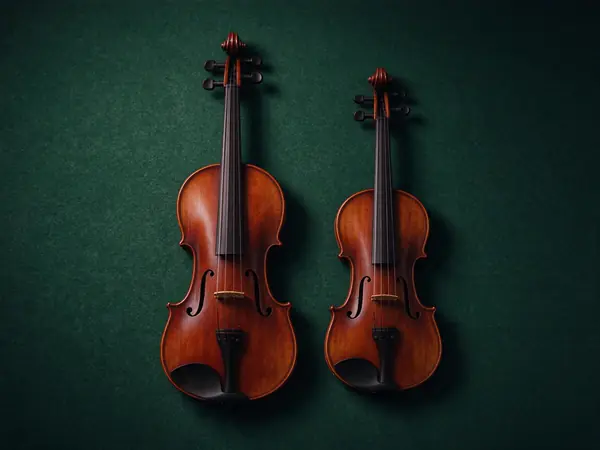
A teacher checking a pupil’s violin
Bow each open string on the pupil’s instrument and read the cents, so the lesson starts in tune.
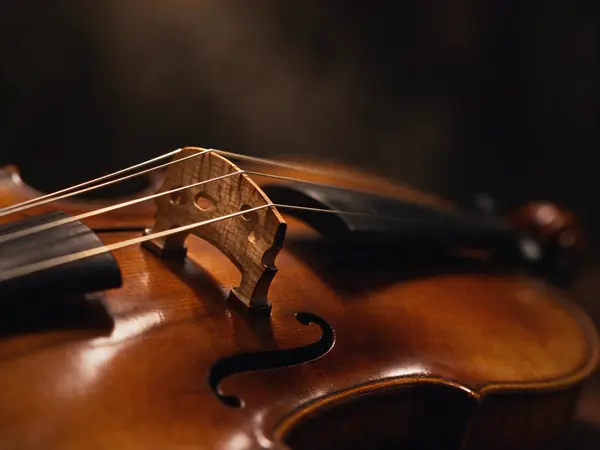
Breaking in a new set of strings
Fresh strings keep sinking flat for days: the violin tuner shows how far each has dropped before every practice.
Violin tuner FAQ
More audio tools
Open the violin tuner
Start the violin tuner, draw the bow across the A, and see the cents and which way to turn the fine tuner.