
Free, no sign-in needed
Cello Tuner
This cello tuner hears your open strings through the microphone, bowed or plucked. It tells the C, G, D and A apart by itself, shows how many cents each sits from its target, and says whether to tune it up or down. The low C at 65.41 Hz reads even through a phone, which barely hears that note’s fundamental. Keep A4 at 440, or set 442 for an orchestra or 415 for baroque pitch. Every string that holds in tune gets a tick. It only listens: nothing is recorded.
The A string, 7 cents flat
String 1, the highest: A3 is 220.00 Hz, an octave below the A an orchestra tunes to. A cello string we synthesized, bowed steadily.
Cello · Standard
Tune up · 7¢ flat · String 1
Steady after 0.41 s
- no sign-in, nothing uploaded
- Free
- the low C up to the A
- C G D A
- 95% of readings, synthetic bowed notes
- ±0.19¢
- the C string, read through a phone too
- 65.41 Hz
- one open string at a time
- Bow or pluck
- orchestras often 442, baroque 415
- A4 415 to 466
How do I tune a cello with an online cello tuner?
Open the cello tuner, press Start tuning and let the browser use the microphone; standard C G D A is ready. Tune the A first: draw a long, even bow on the open string, or pluck it, and the cello tuner names the string and shows how many cents it sits flat or sharp. Use the fine tuner for a small gap and the peg for a large one, until the needle settles in the green band. Then do the D, the G and the low C in turn, and finish by checking the A.
Cello tuning in three steps
The cello tuner online runs in any up-to-date browser on a phone, tablet or laptop. Stand it on the music stand, where it can hear the cello clearly.
Press Start tuning
Allow the microphone and the four cello strings are set up, C G D A. If your orchestra tunes to 442, move A4 there before you play a note.
Sound one open string
Bow it with an even stroke or pluck it, clear of the strings beside it. The cello tuner recognises which one it is; tap a string instead to make it the target.
Settle into the green
Turn a little at a time until the needle stays inside the band. The cello tuner ticks that string and the count reads Tuned 1/4.
A cello tuner built for low, bowed strings
From the 65 Hz C up to the A, this online cello tuner reads a steady bow or a pluck; the figures below come from our own tests.
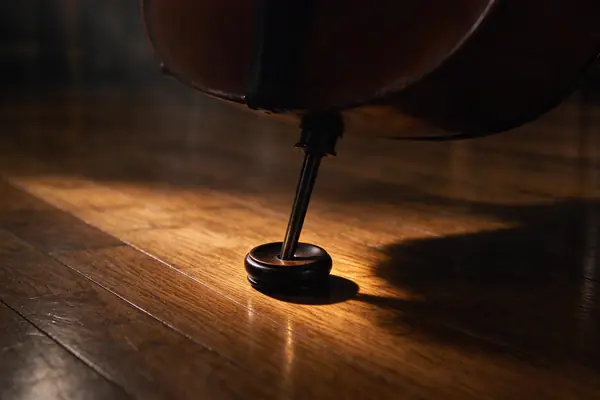
Standard cello tuning: C G D A
From the lowest string up, a cello is tuned C2, G2, D3 and A3, each a perfect fifth above the last and an octave below a viola. The cello tuner shows the frequency it hears beside the one the string should reach, and works out which string you played from the note itself, so tune in any order. If a string has dropped so far that it sounds nearer its neighbour, tap the one you mean and the cello tuner keeps it as the target.
Tested on synthetic bowed cello notes
We built 92 bowed cello notes in software, held perfectly steady, for the cello tuner to read: every string, from dead in tune to 25 cents out, some under background noise, some with a faint or absent fundamental, some cut the way a phone microphone cuts. The median error rounds to 0.00 cents, 95% of readings landed within 0.19 cents, and no string was mistaken for another. With no pluck to fade, the first steady reading was already on pitch, after 0.5 s. A real bow wavers at the start and takes longer, so draw a long, even stroke for a second or two.
The low C, even through a phone
A phone’s small microphone picks up very little under 150 Hz, and the C string’s fundamental is 65 Hz, so it mostly hears the partials above. The cello tuner measures the note from those partials and checks it hasn’t landed an octave too high. On this card everything below 150 Hz is cut and the fundamental removed outright, yet the cello tuner still reads C2, 5 cents flat.
Nine other online tuners, the same six tones
Our general test played six tones into nine other online tuners and into ours. None is a cello note; they come from guitar, bass and ukulele. The closest is a guitar’s E2 at 82.41 Hz, between your C and G strings: we read it at +0.07 cents, and at +0.28 cents with its fundamental 30 dB down. On that weak E2 one of the others read E3, an octave high, at times; on the bass’s E1, lower than any cello string, three showed nothing.
Needle view and strobe view
The needle on the cello tuner shows at a glance how far out a string is, inside a green band of ±3 cents; tighten it to ±1 before a recital or loosen it to ±5 between movements. The strobe’s stripes drift right while the string is sharp, left while it is flat, slow as you close in and stand still once it is right, so the final small turn of a fine tuner is easy to judge.
Reference tones for tuning by ear
Tap any string and the cello tuner plays its note, so you can match each string to its own tone by ear, one string at a time, no microphone needed. A4 goes anywhere from 415 to 466 Hz: 442 or 443 for orchestras that sit high, 415 for a baroque group, and every reference tone follows.
Scordatura and other tunings, saved as a link
Some cello music asks for another tuning: Bach’s fifth suite for solo cello lowers the A string to G. Build any tuning a semitone at a time, then copy a link that opens the cello tuner already set to it. Each string that holds in the band is ticked, so Tuned 2/4 means two of four are done.
Cello tuner samples: four strings and their readings
Cello strings we synthesized and bowed steadily, each read by the online cello tuner itself: an A 7 cents flat, a C 6 cents sharp, a G 12 cents flat, a D already in tune, the C through a phone microphone and a new A string 22 cents flat. Open a card to carry on in the studio, set to the cello.
Cello tuning guide: notes, endpin, pegs and pitch
Cello strings and their notes
A cello is tuned C2, G2, D3 and A3 from the thickest string to the thinnest. At A = 440 those are 65.41 Hz, 98.00 Hz, 146.83 Hz and 220.00 Hz, a perfect fifth apart, and the set sits an octave below the viola’s strings. The A string is an octave under the A an orchestra tunes to.
Cellists number the strings from the top: string 1 is the A, string 2 the D, string 3 the G and string 4 the C. The cello tuner names the string it hears with those numbers.
How to tune a cello, starting on the A
Sit with the endpin set so the cello stands steady and the pegs are in reach of your left hand. Tune the A first, the string nearest the note an orchestra gives, then the D, the G and the C. Bow with an even weight, or pluck with the right hand while the left turns the peg.
Play each string alone, clear of the next: a clean single note gives the cello tuner its steadiest reading. Once all four are ticked, bow the A again, since raising the lower strings adds pressure on the bridge and the A can move.
- 1Needle left of the band, string flat: tighten it, clockwise on a fine tuner.
- 2Needle right of the band, string sharp: loosen it, anticlockwise on a fine tuner.
- 3Needle inside the band: a tick appears, so go on to the next string.
Fine tuners, pegs and the endpin
A fine tuner is a small screw on the tailpiece that moves its string a few cents, right for the last adjustment. Many cellos have one on the A only, some on the D too, and student cellos often have four.
For a string well off pitch, or a new one coming up, use the peg at the scroll: turn a little at a time and press it gently into the peg box so it grips. Anchor the endpin first, in a stop or on a floor that won’t slip, so the cello stays put while both hands work.
When a fine tuner screw is nearly all the way in, unwind it to the middle and take up the difference with the peg, so the screw has travel left for the next session.
Phone microphones and the low C string
One vibration of the C string, at 65.41 Hz, lasts about 15 milliseconds, so the cello tuner needs several before it can pin the pitch down: on our cards the C and G settled about a tenth of a second after the A and D. A phone hears the C’s partials far better than its fundamental, so the cello tuner works the note out from them and then checks the octave.
Setting the cello tuner to orchestra pitch
Most music is tuned to A4 = 440 Hz, but plenty of orchestras sit a little higher at 442 or 443, and baroque ensembles often use 415, about a semitone lower. Set A4 in the cello tuner before you leave home and all four targets follow, so your cello already matches the section when the oboe gives the A.
Pure fifths by ear, and why the C comes out low
Many cellists set the A, then bow two neighbouring strings together until the fifth rings without beating. A beatless fifth is close to 2 cents wider than an equal-tempered one; the cello tuner aims for the equal-tempered fifth, and the gap grows on the way down: the D lands about 2 cents low, the G about 4 and the C about 6.
That is how pure fifths sound. Widen the band to ±5 and the D and G are ticked; the C stays just outside. Playing with a piano, many cellists narrow their fifths slightly so the C isn’t low against it, which is what the cello tuner’s targets give.
New strings and the cello tuner
A fresh set of cello strings stretches for several days and keeps drifting flat. Bring each one up with the peg, play a while and tune again; the cello tuner shows how far each has dropped. Glance at the bridge from the side now and then too, as rising strings pull its top toward the fingerboard.
Moments for the cello tuner
A minute before practice, a lesson or a rehearsal: wherever the cello comes out of its case, the cello tuner is ready.
A first cello at home
A parent sits with a young beginner on a small cello: tap the A in the cello tuner, turn its fine tuner into the green, then the D, G and C, one tick each.
Taking the cello up again
Strings that went slack in the case come back up with the pegs, and the fine tuners finish the job until the cello tuner shows Tuned 4/4.
Orchestra at A 442
Move A4 to 442 before rehearsal and arrive with the cello already at the pitch the oboe will give.

Bach’s fifth suite
Lower the A to G for the C minor suite, keep that cello tuning as a link, and open it again at the next practice.
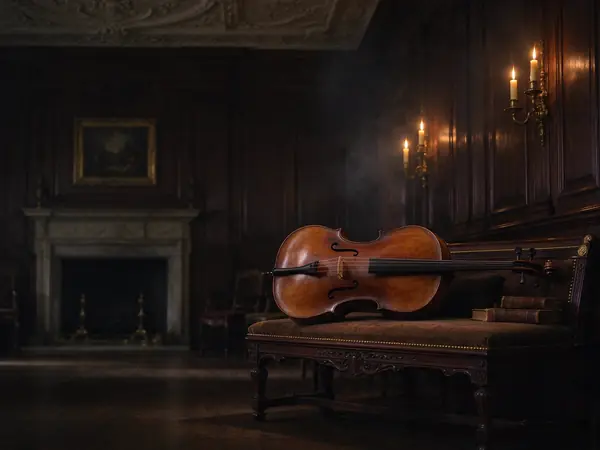
Baroque cello at A 415
A baroque group plays about a semitone low: set A4 to 415 in the cello tuner and the targets of all four strings follow.
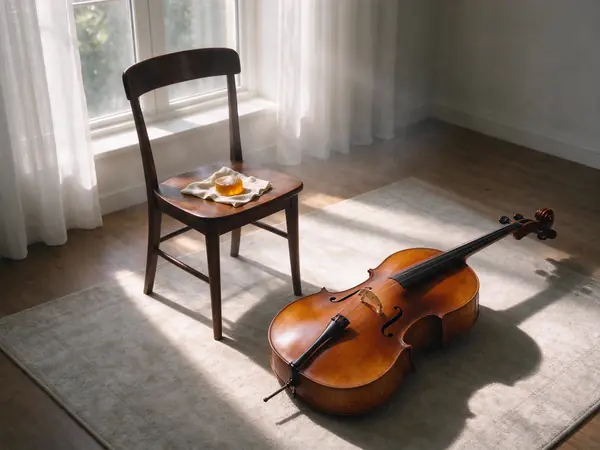
The start of a cello lesson
The teacher bows each open string of the pupil’s cello and reads the cents, so the lesson begins in tune.
Cello tuner FAQ
More audio tools
Open the cello tuner
Start the cello tuner, draw a long bow on the A and see how far it is from 220 Hz, and which way to turn.